









Anethum graveolens (L)
Synonyms and Common names: Peucedanum graveolens (Benth.), Fructus anethi, dilly, garden dill
French = Aneth, German = Dill, Spanish = Encido, Italian = Aneto odoroso
 Order: Umbelliferae
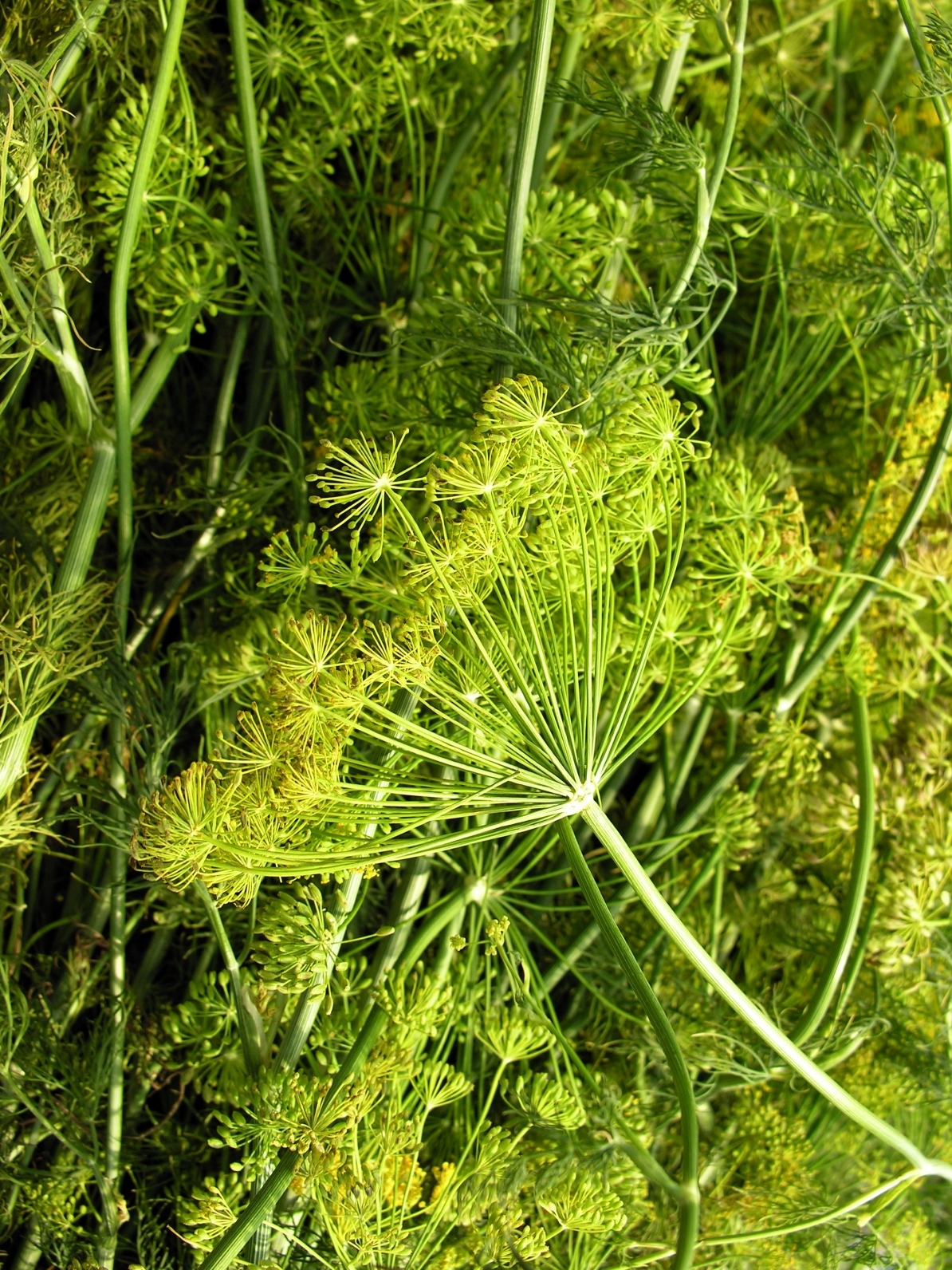
Description: Anethum is an annual herb, growing up to120cm tall. It is indigenous to the Mediterranean and southern USSR, growing wild on rubbish heaps and in coastal hedgerows, but is cultivated elsewhere. The slender, spindle-shaped root is slightly branched, the stem erect, hollow, finely furrowed and branched in the upper part. The alternate leaves are divided three or four times into thin pinnate sections, and are petiolate in the lower part of the stem. The stems and branches terminate in compound umbels up to 15cm in diameter with 30-50 rays which have neither covering nor capsules. They contain small bisexual flowers with an inconspicuous calyx. The yellow petals narrow towards the top and are shallowly indented, their ends turning towards the inside of the flower. The yellowish-brown or reddish fruits develop into ovoid flattened achenes and are compressed together in pairs.
Parts used: dried ripe fruit, aerial parts.
Collection: the seeds are collected when ripe, after they have turned brown. The herb is collected during the flowering season.
Constituents: At least 2.5% volatile oil (50% carvone, plus limonene, eugenol, antheole and others), flavonoids (including kaempferol), coumarins, xanthone derivatives, triterpenes, phenolic acids, protein, fixed oil.
Actions: carminative, aromatic, stomachic, antispasmodic, galactagogue
Indications: flatulent dyspepsia; specifically indicated for flatulent pain in infants.
Therapeutics and Pharmacology: Anethum is a common ingredient in gripe water, given to relieve wind and colic in babies. The carminative volatile oil improves the appetite and aids digestion. Chewing the seeds is helpful in cases of halitosis. Anethum stimulates milk flow in lactating mothers, and is often given to cattle for this reason. An infusion of the flowering plant is recommended for urinary complaints and for coughs while soaking the hands in a decoction of the seeds is said to strengthen the nails.
Preparation and Dosage: (thrice daily)
Regulatory Status GSL Schedule 1
Dried fruits: 1-4g or by infusion
Distilled dill water B.P.C. (1949) 2-4ml
Concentrated Dill Water B.P.C.(1973) 0.2-1ml
Dill oil B.P.: 0.05-2ml
Additional Comments: The name Dill is derived from the Old Norse dylla, meaning �to lull�, or �soothe�, alluding to its carminative properties. This herb was used as a charm against witchcraft during the Middle Ages and was burned to clear thunderclouds. Dill seed is a popular pickling spice, and the leaves are commonly used to flavour fish dishes. The stems and flowers are also used as a flavouring.
Bibliography
Bartram, T. 1995 Encyclopedia of Herbal Medicine, 1st edn.,Grace Publishers, Bournemouth.
Bremness, L. 1994 Herbs, Dorling Kindersley Eyewitness Handbook, London.
BHMA 1983 British Herbal Pharmacopoeia, BHMA, Bournemouth.
Chevallier, A. 1996 The Encyclopedia of Medicinal Plants, Dorling Kindersley, London.
Grieve, M. 1931 A Modern Herbal, (ed. C.F. Leyel 1985), London.
Hoffmann, D. 1990 The New Holistic Herbal, Second Edition, Element, Shaftesbury.
Hyperhealth 1996 Natural Health and Nutrition Databank, v.96.1 CD-ROM, �In-Tele-Health, available from Healthworks, Leeds. ISBN 0-646-30942-0
Lust, J. 1990 The Herb Book, Bantam, London.
Mabey, R. (ed.) 1991 The Complete New Herbal, Penguin, London.
Prihoda, A. 1989 The Healing Powers of Nature, Octopus, London.
Wren, R.C. 1988 Potter's New Cyclopaedia of Botanical Drugs and Preparations, C.W.Daniel, Saffron Walden.